

 Food History & Origins
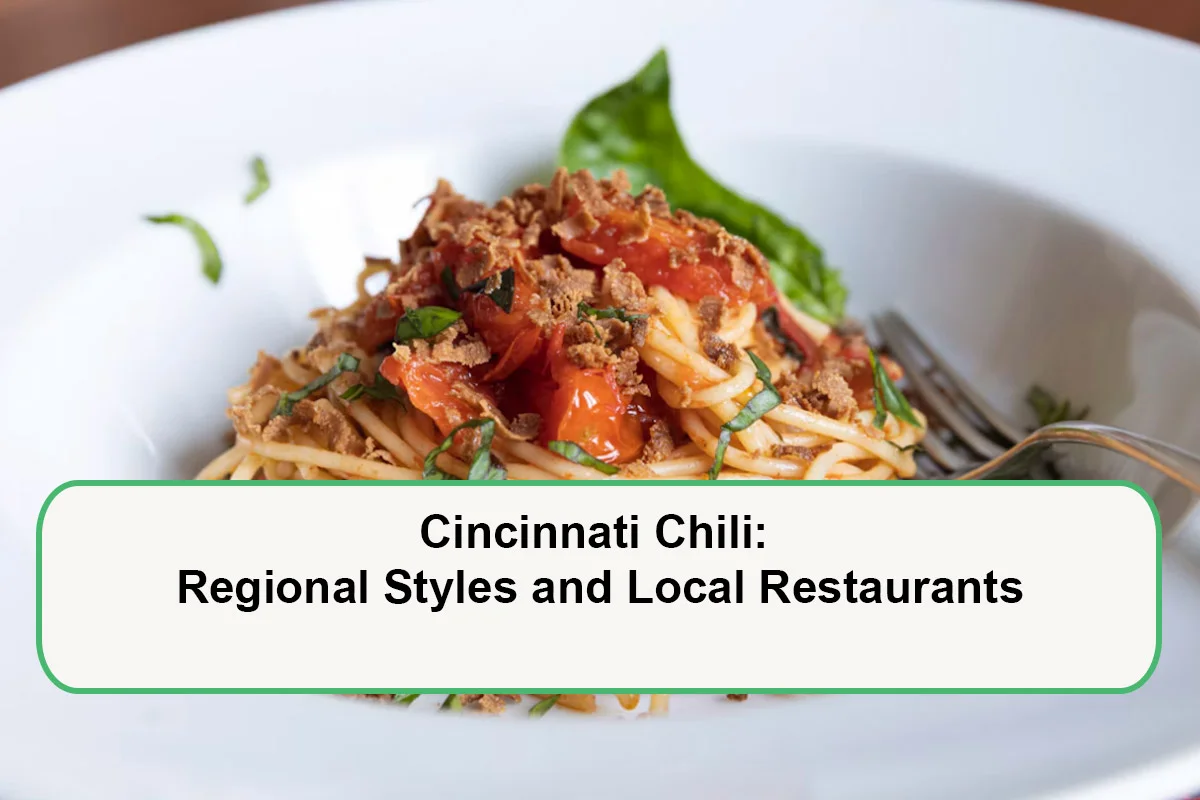
Cincinnati Chili: Regional Styles and Local Restaurants
Published On 30-10-2026
Published by Restaurant Listings Editorial Team
Spanish cuisine gets summarized so often as "paella, tapas, and sangria" that it's easy to miss just how much history is layered into even a simple plate of jamón or a bowl of gazpacho. Nearly every defining ingredient and technique in Spanish cooking arrived through some combination of conquest, trade, or migration, stretching back more than two thousand years. Understanding that layered history explains why Spanish food varies so dramatically by region, and why a dish considered classically "Spanish" often traces its roots to somewhere else entirely.
Long before Spain existed as a unified country, waves of Mediterranean traders and colonizers left lasting culinary fingerprints on the Iberian Peninsula. Phoenician traders are generally credited with introducing early sauce-making traditions, while Greek settlers brought olive cultivation and olive oil, an ingredient that remains absolutely central to Spanish cooking today. Roman rule, which lasted for centuries, introduced new agricultural techniques, irrigation systems, and additional culinary methods, embedding wheat, wine, and olive oil even more firmly into the region's food culture.
This early Mediterranean layer established Spain's basic culinary foundation, olive oil, wheat, wine, and Mediterranean produce, well before the influence that would ultimately transform the cuisine most dramatically: nearly 800 years of Moorish rule.
In 711 CE, Umayyad forces crossed from North Africa and, within roughly eight years, brought most of the Iberian Peninsula under Moorish control, with the notable exception of Asturias and Galicia in the north. The centuries of Islamic rule that followed, particularly concentrated in Andalusia, left what many food historians consider the single most significant mark on Spanish cuisine, more influential than any other historical period.
The scope of Moorish culinary influence is genuinely extensive:
Moorish culinary influence remains most concentrated today in southern and eastern Spain, particularly Andalusia, Aragón, Extremadura, Murcia, and Valencia, regions where Moorish presence lasted longest. Notably, the Basque Country in the north was never conquered by Rome and largely escaped direct Arabic culinary influence as well, one of several reasons Basque cuisine developed along a genuinely distinct path from the rest of the country.
The Reconquista, the centuries-long Christian reconquest of the Iberian Peninsula, concluded in 1492, the same year that set off the next major transformation of Spanish cuisine. As Christian rule was reestablished across the peninsula, culinary traditions continued to blend rather than fully reverting to a pre-Moorish state, since generations of shared agricultural and culinary practice had already reshaped what "Spanish" food actually meant.
If Moorish influence represents the first great transformation of Spanish cuisine, the Columbian Exchange, following Spain's exploration and colonization of the Americas beginning in 1492, represents the second. Spanish ships returning from the New World brought back ingredients that would become so deeply embedded in Spanish cooking that many people today assume they were always native to the country:
| Ingredient | Origin | Modern Spanish Dishes |
|---|---|---|
| Tomatoes | Americas | Gazpacho, sofrito, countless sauces |
| Potatoes | Americas | Tortilla española, patatas bravas |
| Peppers (including paprika/pimentón) | Americas | Chorizo, patatas bravas, countless stews |
| Corn | Americas | Regional breads and side dishes, particularly in northern Spain |
It's genuinely difficult to overstate how much this changed Spanish cooking. Dishes now considered foundational and traditional, like tortilla española (potato omelet) and gazpacho (cold tomato soup), rely entirely on ingredients that didn't exist anywhere in Spain before the late 15th century. What feels timelessly Spanish today is, in ingredient terms, a relatively recent addition layered on top of much older Mediterranean and Moorish foundations.
Tapas culture, now one of Spain's most recognizable culinary exports, is generally traced to Andalusia, with some accounts placing its origins as far back as the 19th century, though the exact story is debated. One widely repeated legend attributes tapas to a Spanish king who ordered that a slice of bread or ham be placed atop wine glasses, both to keep out flies and dust and to slow the effects of drinking on an empty stomach; "tapa" itself translates to "cover" or "lid." While the specific royal origin story is difficult to verify historically, the underlying practice, small bites served alongside drinks, clearly developed organically across Andalusian taverns and eventually spread nationwide, evolving into the broader social dining tradition recognized today.
One of the most common misconceptions about Spanish cuisine is treating it as a single, unified style. In reality, Spain's regional culinary traditions differ substantially, shaped by distinct geography, climate, and historical influence:
This regional variation is part of why a single dish, like paella, can look meaningfully different depending on where in Spain it's made, and why lumping "Spanish food" into one uniform style misses much of what makes the cuisine genuinely interesting.
Spanish cuisine's presence in the U.S. has grown substantially in recent decades, driven both by immigration and by broader American interest in tapas-style, shareable dining formats. Cities across the country now support dedicated Spanish restaurants and paella bars, often built specifically around tapas culture and communal, small-plate dining, a format that has proven especially well suited to American dining trends favoring variety and shared plates over a single, individually plated entrée.
Because Spanish restaurants range from casual tapas bars to destination-level dining, a few markers tend to separate kitchens taking the tradition seriously from those offering a surface-level approximation:
A few trends are likely to keep shaping how Spanish food appears on American menus:
Reviewed and verified by the Restaurant Listings Editorial Team for accuracy and relevance. Our content is researched using official restaurant sources, public records, government agencies, and recognized food safety and hospitality industry resources.
Last reviewed: August 2026
Food History & Origins
 Food History & Origins
 Food History & Origins