

 Dining Guides & Concepts
Restaurants with Sensory-Friendly Dining Hours in the USA
Published On 11-10-2026
Published by Restaurant Listings Editorial Team
A generation ago, finding out how many calories were in a restaurant meal meant guessing. Today, millions of Americans check the nutrition facts for a burrito bowl or a latte on their phone before they order. Some restaurants publish full nutrition panels for every item, let you build a meal in an online calculator, and update the numbers as you add or remove ingredients. Others post the bare legal minimum, and many independent restaurants publish nothing at all.
This guide explains which restaurants are required to share nutrition information, what they must disclose, which types of restaurants tend to offer the most complete online menus, and how to use those tools well, whether you are counting calories, watching sodium, managing diabetes, or eating more protein.
The baseline in the United States is the federal menu labeling rule, which took full effect on May 7, 2018. According to the U.S. Food and Drug Administration, it applies to restaurants and similar retail food establishments that are part of a chain with 20 or more locations doing business under the same name and offering substantially the same menu items. Covered restaurants must:
Two points are worth knowing. First, the law requires the full nutrition breakdown to be available, but it does not require it to be online. Most large chains publish it on their websites and apps anyway, because it is cheaper and more convenient than printing binders. Second, restaurants with fewer than 20 locations are not covered, which is why your favorite local bistro probably has no calorie counts at all.
Online nutrition tools vary enormously. Broadly, they fall into three levels.
Many chains post a downloadable PDF that lists every standard menu item with its calories, fat, sodium, carbohydrates, and protein. These meet the spirit of the law but are clumsy to use on a phone, and they only describe items as listed, not as you customize them.
Better menus show the full nutrition panel when you tap an item on the website or app, often with allergen and ingredient lists alongside. Panera Bread and Starbucks are well known examples: you can view nutrition for a specific sandwich, salad, or drink, and Starbucks updates its numbers as you change milk, size, or syrup in the app.
The most useful tools let you assemble a meal ingredient by ingredient and watch the totals change. Chipotle's online nutrition calculator is a classic example: add rice, beans, a protein, salsa, and cheese, and it totals calories, fat, sodium, carbohydrates, and protein. McDonald's and Subway also offer online nutrition calculators that let you add or remove ingredients and sauces. Build your own bowl chains in the fast casual category generally do this best, because their menus are made of standard components. If you want to understand why that format took off, read our guide to the difference between fast food and fast casual restaurants.
| Type of restaurant | Typical online nutrition | How useful for customizing |
|---|---|---|
| Large fast food chains (20 or more locations) | Full nutrition charts plus online calculators | High |
| Fast casual build your own bowl chains | Ingredient level calculators in the website and app | Very high |
| Coffee chains | Item level nutrition that updates with size and milk | High |
| Casual dining chains | PDF nutrition guides; some item level online menus | Moderate |
| Independent restaurants and small groups | Usually none; not required by federal rule | Low |
| Meal kit style or health focused concepts | Often full macros by item, sometimes beyond legal requirements | High |
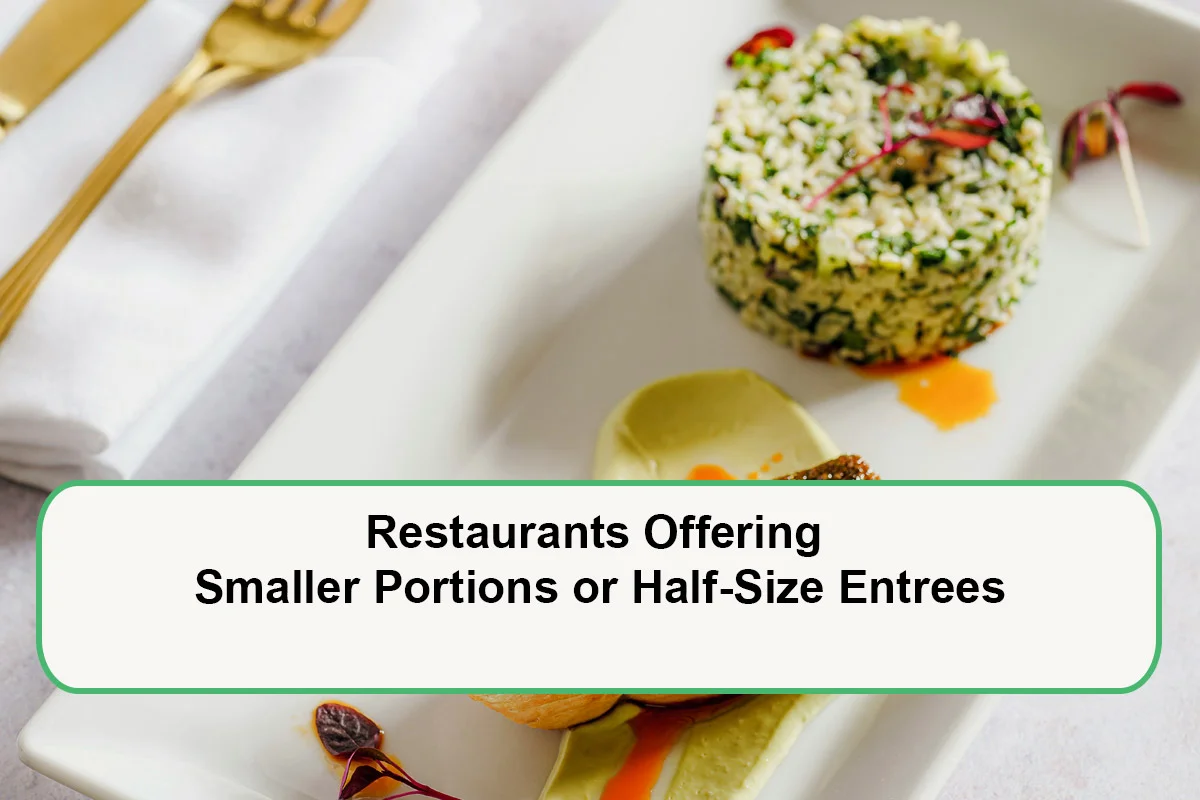
Nutrition information has become a marketing tool. In January 2026, NBC News reported a wave of chain menu changes aimed at people eating smaller portions and more protein, a shift tied in part to the growing use of GLP-1 weight loss drugs. Chipotle introduced a High Protein Menu, including a cup of chicken with 32 grams of protein. Subway added snack wraps with more than 20 grams of protein each and brought back its Fresh Fit menu. Olive Garden added a lighter portion section; its standard chicken parmigiana has about 1,020 calories and 64 grams of protein, while the lighter version has about 630 calories and 36 grams. When restaurants build entire menus around protein grams and calorie counts, they have every reason to publish detailed nutrition. Our article on how GLP-1 drugs are changing what Americans order explores this trend further.
Restaurant nutrition data is usually calculated from recipes and standard portions, sometimes with laboratory testing to check the results. That means real world meals can differ. A cook who adds an extra scoop of rice, a heavier pour of dressing, or a larger cut of steak can easily add a few hundred calories. Federal rules require that the information have a reasonable basis, but there will always be some variation from plate to plate.
A few habits help you use the numbers sensibly:
Detailed online menus are a major help for people managing blood sugar, because they show carbohydrates, fiber, and sugars by item. Building a bowl or salad online lets you see how swapping rice for extra vegetables changes the total. Our guides on what to eat at restaurants if you are diabetic and the list of foods for diabetics to avoid pair well with these tools.
Saturated fat, trans fat, cholesterol, and sodium are all part of the federally required nutrition panel. For cuisine specific tips, see our articles on enjoying Thai food with high cholesterol, pizza and cholesterol, and eating Italian food on a cholesterol conscious diet.
If you are trying to eat more protein or fewer calories, item level tools let you compare protein per calorie across the menu. Grilled proteins, double meat options, and smaller portions often deliver the best ratios.
Independent restaurants and small local groups rarely publish nutrition data, and they are not required to. You can still eat thoughtfully:
Many people also find that restaurants focused on fresh ingredients are easier to navigate. Our guides to farm to table dining and how restaurants source ingredients explain what those menu labels really mean.
Federal law guarantees that chains with 20 or more locations post calories and provide full nutrition information on request, and most of them go further by publishing detailed nutrition online. The best tools, typically from fast casual bowl chains, coffee chains, and the largest fast food brands, let you customize a meal and see the totals instantly. Independent restaurants rarely provide this data, so a few smart questions and portion strategies go a long way. For more practical dining advice, explore our food knowledge collection.
Reviewed and verified by the Restaurant Listings Editorial Team for accuracy and relevance. Our content is researched using official restaurant sources, public records, government agencies, and recognized food safety and hospitality industry resources.
Last reviewed: October 2026
Dining Guides & Concepts
 Dining Guides & Concepts
 Dining Guides & Concepts