 Restaurant Types
Restaurants with Clear Online Accessibility Information
Published On 30-10-2026
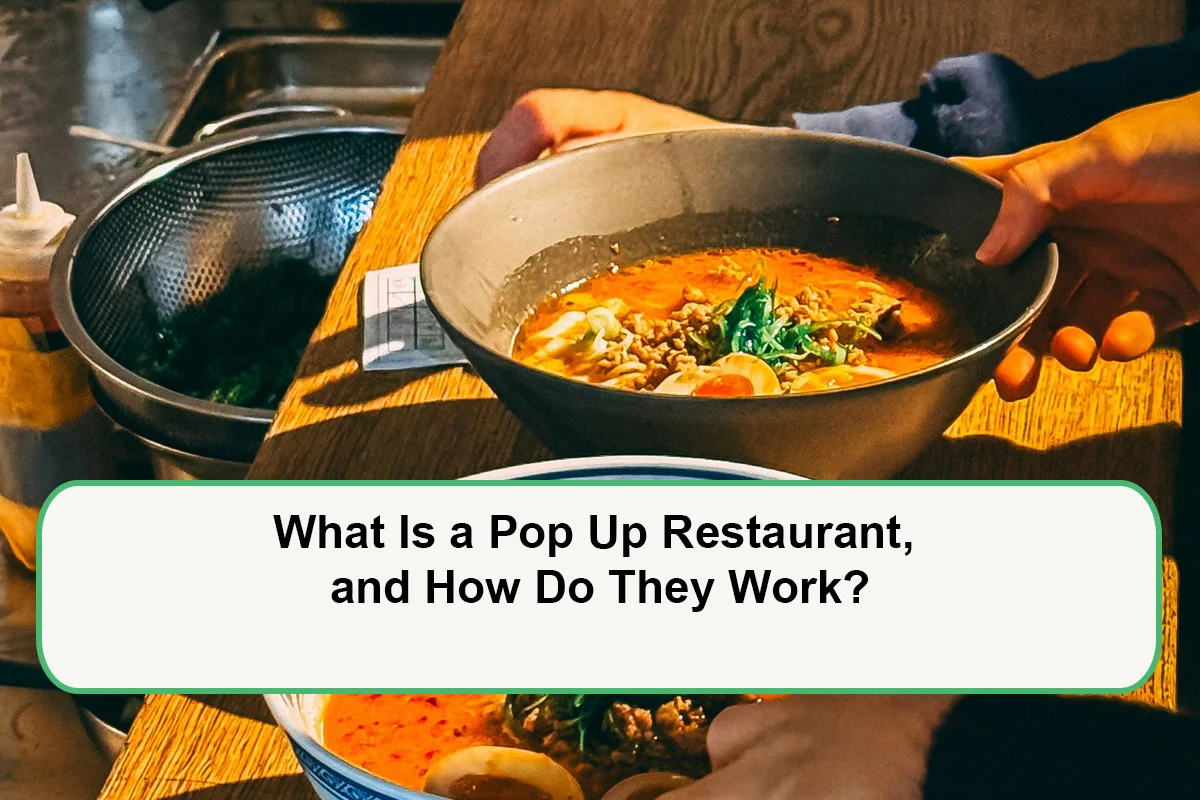
Pop up restaurants have gone from a niche experiment to one of the fastest growing formats in American dining, and the numbers back that up: pop up dining experiences grew more than 155 percent over a recent three year period, according to Yelp data, and Eventbrite has reported year over year growth in pop up dinners of more than 82 percent. Here is what actually defines the format and how it works, both for the chefs running them and the diners buying a seat.
A pop up restaurant is a temporary dining operation that runs for a limited window, sometimes a single night, sometimes a full season, inside a space it does not own or lease long term. Pop ups show up in genuinely unconventional locations: bars, art galleries, theaters, bowling alleys, breweries, private homes, and existing restaurants operating after their normal hours. What unites all of them is a shared set of three characteristics: they are temporary, meaning they are never intended to become a permanent fixture; they are flexible, letting an operator test a new menu, format, or market without a long term commitment; and they are experience driven, built around creating something diners cannot get from a standard restaurant visit.
The appeal for operators comes down largely to cost and risk. A traditional restaurant requires signing a lease, buying equipment, and hiring a full time staff before a single plate goes out, a commitment that can run into hundreds of thousands of dollars before opening night. A pop up sidesteps nearly all of that, using an existing kitchen, borrowed or rented equipment, and a lean, temporary team, which means an aspiring restaurateur or an established chef testing a second concept can find out whether an idea actually works before signing anything permanent. That lower barrier to entry is a big part of why so many pop ups function as genuine proof of concept exercises, sometimes leading directly to a permanent restaurant once the format has proven itself with real customers.
Pop ups can be genuinely profitable specifically because they avoid the two costs that sink so many permanent restaurants: rent and full time payroll. A ticketed dinner for 40 guests at $75 a seat grosses $3,000 against only a few hundred dollars in fixed costs for the night, a margin that a traditional restaurant, weighed down by monthly rent and a full staff whether or not tables are full, usually cannot match on a single night's business. Industry guidance for budgeting a pop up often points to a rough version of the standard restaurant cost breakdown, roughly 30 percent of revenue going to food cost, 30 percent to labor, and 30 percent to overhead including venue fees and permits, leaving around 10 percent as profit, though operators are encouraged to apply that math per event and adjust pricing or seat count if overhead runs too high.
| Format | What It Looks Like |
|---|---|
| Chef led tasting dinner | A single or multi night ticketed dinner showcasing a specific chef's cooking |
| Test kitchen pop up | An existing restaurant or ghost kitchen trialing a second concept |
| Branded activation | A food brand creating a temporary, experience driven space tied to a launch or campaign |
| Event tied pop up | A temporary food vendor timed to a festival, block party, or other large gathering |
The pop up model has found particular traction in a period when consumers are watching their spending more carefully overall. National Restaurant Association research from 2026 found more than seven in ten consumers say they would eat out more often if they had more disposable income, a sign of real, pent up demand even during a period of tighter household budgets. A pop up converts that demand into a scarce, ticketed event, limited seats and limited dates, which is exactly the kind of experience diners have shown they are still willing to pay for even while cutting back elsewhere. That dynamic matters for operators too: the same research found 42 percent of restaurant operators reported being unprofitable in the prior year, making a lower risk pop up an increasingly attractive way to test a concept before committing to a lease.
Pop ups do not usually show up through the same channels as a regular restaurant search, since they are, by definition, not permanent listings a directory would normally maintain. Instagram and other social platforms remain the most common discovery method, with chefs and organizers announcing dates directly to followers, often with tickets selling out within hours for the most sought after events. Ticketing platforms built around live events, rather than restaurant reservation systems, have also become a common venue for pop up listings, reflecting how closely the format resembles buying a ticket to a show rather than booking a table.
Attending a pop up is a different experience than a standard restaurant reservation in a few practical ways. Seats are usually sold as tickets rather than booked as a normal reservation, often through a platform like Eventbrite or a chef's own website, and tickets are frequently non-refundable given how tightly the kitchen plans food purchasing around a fixed guest count. Menus tend to be fixed rather than a la carte, since a temporary kitchen setup rarely has the flexibility to accommodate the range of substitutions a full time restaurant kitchen can handle. Because pop ups by definition will not be there next month, diners drawn to the format tend to treat attending one less like a routine dinner out and more like buying a ticket to a one time show, which is a big part of the appeal for the growing number of Gen Z and millennial diners who have told researchers they prefer limited time, experiential dining formats over standard restaurant visits.
While temporary restaurant concepts have existed in some form since the early 2000s, the pop up genuinely broke into the mainstream around 2015, when it became known specifically as an affordable alternative to opening a traditional brick and mortar restaurant. The format's growth accelerated sharply during the pandemic, when many restaurants turned to pop up style operations out of necessity rather than choice, experimenting with limited hours, outdoor setups, and rotating guest chefs as a way to stay in business during a period when a full, permanent operation was not realistic. That period normalized the format for a much wider range of operators and diners than had embraced it before, and much of its current popularity traces directly back to habits formed during that stretch.
Yes. Even a single night pop up typically needs health department approval and proper permits in the jurisdiction where it operates, and operators working inside an existing restaurant's kitchen generally rely on that restaurant's existing licensing rather than obtaining an entirely separate one. That regulatory reality is part of why most legitimate pop ups partner with an established venue that already holds the necessary permits, rather than attempting to operate from scratch in a completely unlicensed space.
For a look at another dining format built around limited seating and a curated, non-traditional structure, see our guide to what a supper club is, a format that shares some of the pop up's intimacy while typically operating on a more regular, recurring schedule.
Reviewed and verified by the Restaurant Listings Editorial Team for accuracy and relevance. Our content is researched using official restaurant sources, public records, government agencies, and recognized food safety and hospitality industry resources.
Last reviewed: September 2026